Trieste: How to Order Coffee, and Everything Else the City Does Differently
A Trieste weekend guide with the local coffee vocabulary you need before you order, the historic cafés worth sitting in, and how to reach Miramare - plus San Giusto, Borgo Teresiano and Risiera di San Sabba.
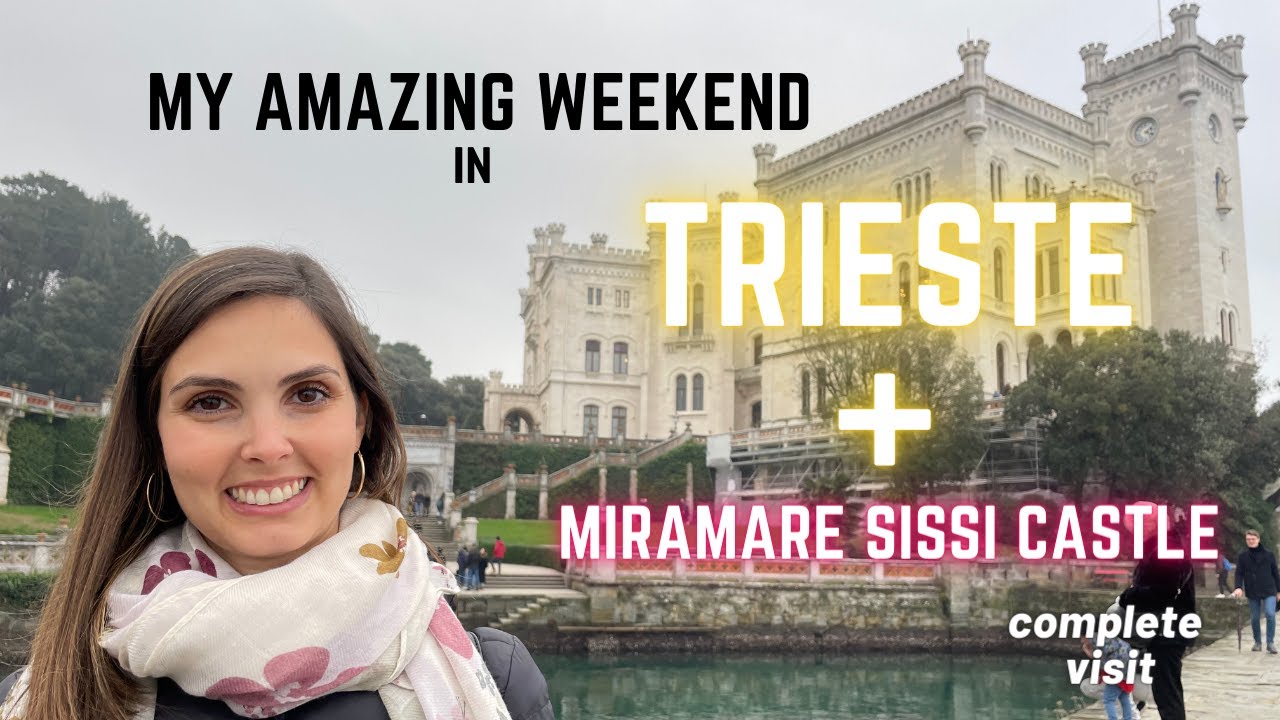
Trieste is in Italy, but it spent centuries as the Habsburg Empire’s only real seaport, and it never quite stopped being that. The architecture is Viennese, the food has horseradish in it, and if you walk into a bar and order “un caffè” you will get something you were not expecting.
Start with the coffee, because it is the part that will affect you within an hour of arriving.
Order coffee like a local, or get the wrong drink
Trieste is Italy’s coffee port — green beans have come through here for three hundred years, illy and Hausbrandt are both Trieste companies, and the city is routinely said to drink around twice the Italian average per head. It also has its own vocabulary, which is used nowhere else, and which the bars use with each other and with you.
| You say | You get | What you would say elsewhere in Italy |
|---|---|---|
| nero | An espresso | caffè |
| capo | An espresso with a little milk foam, in a small cup | caffè macchiato |
| capo in b | The same, but in a small glass (in bicchiere) | macchiato in vetro |
| goccia | An espresso with just a drop of foam | caffè macchiato “poco” |
| deca | Decaf — combines with the above (deca in b) | decaffeinato |
| caffelatte | A large milky coffee, usually in a glass | latte macchiato |
The one to remember is capo in b: it is the local default, it is served in a glass so you can see the layers, and it is the order that makes a bar treat you like you have been before. Asking for “un cappuccino” gets you a cappuccino — but note that here a capo is not a small cappuccino, it is a macchiato, and the two words look far more similar than the drinks do.
Where to drink it
The historic cafés are not tourist reconstructions; they are still the city’s living rooms, and sitting in one for an hour is a legitimate use of a morning.
- Caffè San Marco (1914) — Viennese in every detail, bombed in the First World War for being a meeting place for irredentists, rebuilt, and now half café and half bookshop. The best single room in the city.
- Caffè Tommaseo (1830) — the oldest, near the waterfront, mirrors shipped from Belgium.
- Caffè degli Specchi — on Piazza Unità d’Italia itself, so you pay for the square and the square is worth it.
- Antico Caffè Torinese — small, wood-panelled, more bar than salon.
These are also literary addresses rather than decorative ones. James Joyce lived in Trieste from 1904 to 1915, taught English here, and wrote much of Dubliners and A Portrait of the Artist as a Young Man in the city; there is a statue of him on the Ponterosso bridge. Italo Svevo was his student and friend. Umberto Saba ran an antiquarian bookshop in Via San Nicolò that is still there and still selling books.
And when you want to eat: the buffet
The other thing Trieste does differently. A buffet here is not a self-service spread — it is a particular kind of place serving hot boiled pork carved to order, with sauerkraut, mustard and kren (fresh grated horseradish). Buffet da Pepi, open since 1897, is the canonical one. It is Austro-Hungarian food in an Italian city, and it is genuinely local rather than a revival.
The city, in walking order
Piazza Unità d’Italia is the largest sea-facing square in Europe, open on one whole side to the Adriatic, and it is the reason Trieste photographs the way it does. Walk out onto Molo Audace, the pier that runs into the water from the square, at the end of the day.
Behind it, Borgo Teresiano is the 18th-century grid built by Maria Theresa on drained salt pans, laid out around the Canal Grande — a short canal that lets boats come into the middle of the city, with the neoclassical church of Sant’Antonio at the head of it and the Serbian Orthodox San Spiridione, all domes and gilding, a street away.
Uphill, the Colle di San Giusto carries the Roman theatre on its flank, the cathedral of San Giusto with its 14th-century mosaics, and the castle with a rampart walk over the rooftops. It is steep; there is a bus if you would rather not.
And Risiera di San Sabba, in the southern suburbs, was a rice mill converted by the Nazi occupiers into a detention camp — the only one on Italian soil equipped with a crematorium. It is now a national monument and a museum. It is a hard visit and a short one, and I think it belongs in an honest account of this city rather than in a footnote.
Miramare, and how to actually get there
Castello di Miramare is the white castle on the promontory at Grignano, built in the 1860s for Archduke Maximilian of Habsburg — later, briefly and disastrously, Emperor of Mexico. The interiors are preserved as they were furnished, and the park runs down to the sea around it.
Getting there without a car, in order of preference:
- Bus 6 then 36, from the centre — the standard route, roughly half an hour end to end. Current lines and times are on Trieste Trasporti.
- By sea in season — passenger boats run along the coast from the Molo Bersaglieri in summer, which is by far the better arrival: you see the castle the way it was designed to be seen.
- On foot from Barcola — the coastal promenade walk, pleasant and about an hour.
Park and castle are ticketed separately from each other in practice — check the official Miramare site for current opening times, which change between summer and winter. There is also a WWF-run marine protected area at the foot of the promontory.
One more, if you have a half day: the Grotta Gigante at Sgonico, on the Carso plateau above the city, is a single cave chamber large enough to hold a basilica.
Practical things that are specific to here
The bora. Trieste’s north-easterly wind is not a weather detail, it is a local institution — it arrives suddenly, gusts well past 100 km/h in winter, and the city has historically strung ropes along exposed streets for people to hold. If you visit between November and March, check the forecast for wind rather than rain, and bring a coat that closes.
The Opicina tram, the historic funicular-tram up to the Carso, has spent long periods out of service after a 2016 accident. If it is running when you visit it is a lovely half hour; check its status locally rather than planning a day around it.
Trieste is a weekend, not a week. Two full days covers the old town, the coffee, Miramare and San Sabba without rushing. It also sits well as a pairing with Ljubljana or the Slovenian coast, both under two hours away — which is the other thing this city is: a border town that has been three countries’ idea of itself.
Related articles
Written by

Sara
Licensed Pharmacist · Travel Creator
Sara brings a pharmacist's eye to health topics and a personal voice to travel, beauty and everyday lifestyle.
About Sara