Florence Museums: A Practical Art Guide and What I Loved Most
A practical Florence art and museum guide with Uffizi strategy, Duomo passes, Medici sites, Palazzo Pitti, food, evening walks and my original trip photos.
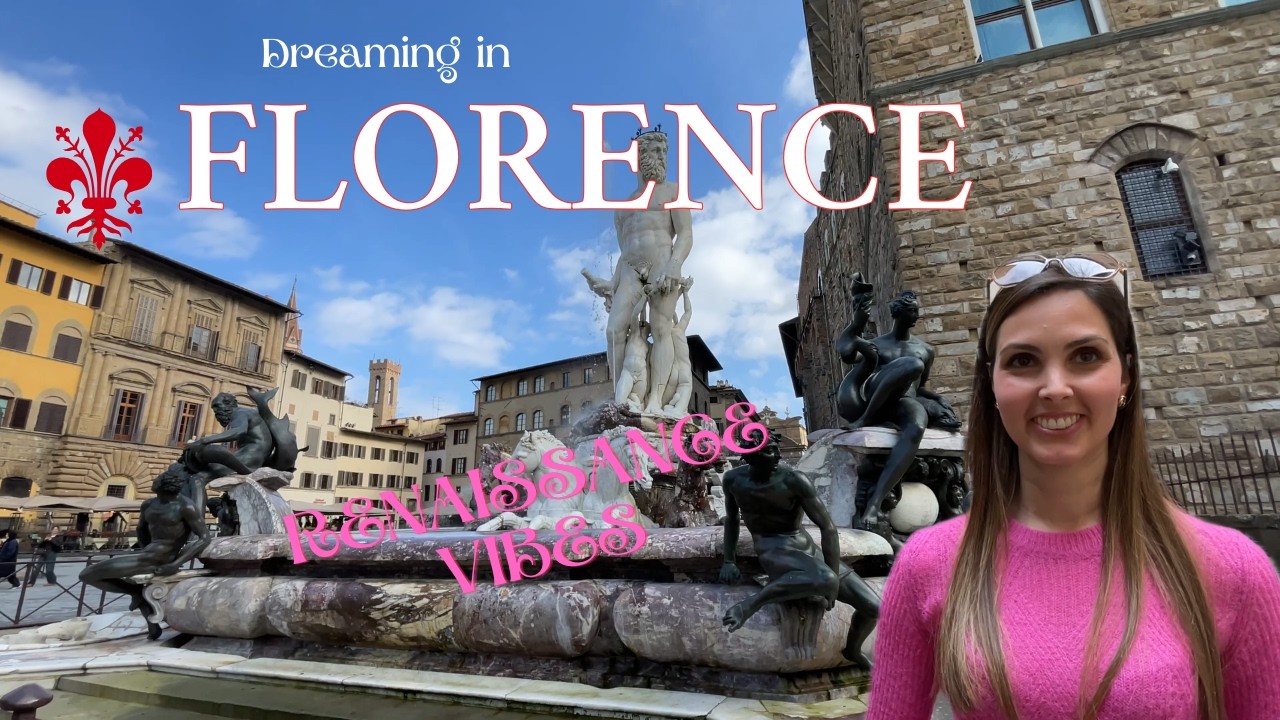
Florence can turn into museum overload very quickly. The standard mistake is to see that the historic centre is compact, assume everything can fit into two days, and then spend the second afternoon walking through masterpieces with no attention left.
What surprised me after looking back at my own trip is that I did not actually feel tired of the museums.
The reason was the mix. The Uffizi and Medici sites were balanced by Piazza della Signoria, Santa Croce, Palazzo Pitti, Museo Galileo, traditional osterias, Ponte Vecchio and long evening walks. So the useful lesson is not “do fewer things at all costs.” It is to alternate different kinds of experience.
This guide keeps the practical detail — what to book, what to prioritise and what each museum is actually good for — but now it also reflects what genuinely stayed with me.
What I would book, and what I would leave flexible
| Place | Booking | Why |
|---|---|---|
| Uffizi | Book ahead | The collection is too important to gamble on a bad queue. |
| Brunelleschi’s Dome | Timed slot required | The climb is tied to the Brunelleschi Pass and has 463 steps. |
| Accademia / David | Book ahead in busy periods | It is a short museum with one enormous draw, so queues concentrate quickly. |
| Palazzo Vecchio | Often easier than Uffizi | Useful to keep flexible around your main reservations. |
| Medici Chapels / Bargello | Usually easier to fit in | Strong shorter museums between bigger anchors. |
| Palazzo Pitti | Worth planning as its own block | The palace and Boboli Gardens can absorb much more time than expected. |
| Duomo Museum / Baptistery | Included through Duomo passes | Check current restoration notices before choosing a pass. |
The Uffizi’s official site currently sells named tickets through its own ticketing platform, including Palazzo Pitti options. For the Duomo complex, the Opera di Santa Maria del Fiore currently uses three passes — Brunelleschi, Giotto and Ghiberti — with different monument access. Check the official Duomo ticket page before buying.
The Uffizi: go to what matters to you first
The Uffizi is exactly the kind of museum where a “start at room one and dutifully continue” strategy can flatten everything.
My own priority was obvious: Botticelli.
Primavera and The Birth of Venus are among my favourite works, and seeing them in person was one of the things I most wanted from Florence. If you have an equivalent must-see, go there while your attention is still fresh.
Then build outward.
The old version of this guide had a useful shortlist that I would still keep:
- Botticelli — Primavera and The Birth of Venus;
- Leonardo — especially the Annunciation and the unfinished Adoration of the Magi;
- Piero della Francesca — the Duke and Duchess of Urbino portraits;
- Caravaggio — including Medusa and Bacchus;
- the Tribuna — a reminder that the Uffizi is also a history of collecting, not only a sequence of paintings.
Two focused hours can be better than four exhausted ones. Stop at the corridor windows, look over the Arno, and let the museum breathe.
The official Uffizi ticket information is the place I would check for current pricing and booking rules.
Piazza della Signoria and Palazzo Vecchio
Piazza della Signoria was one of the places that genuinely moved me, especially after dark.
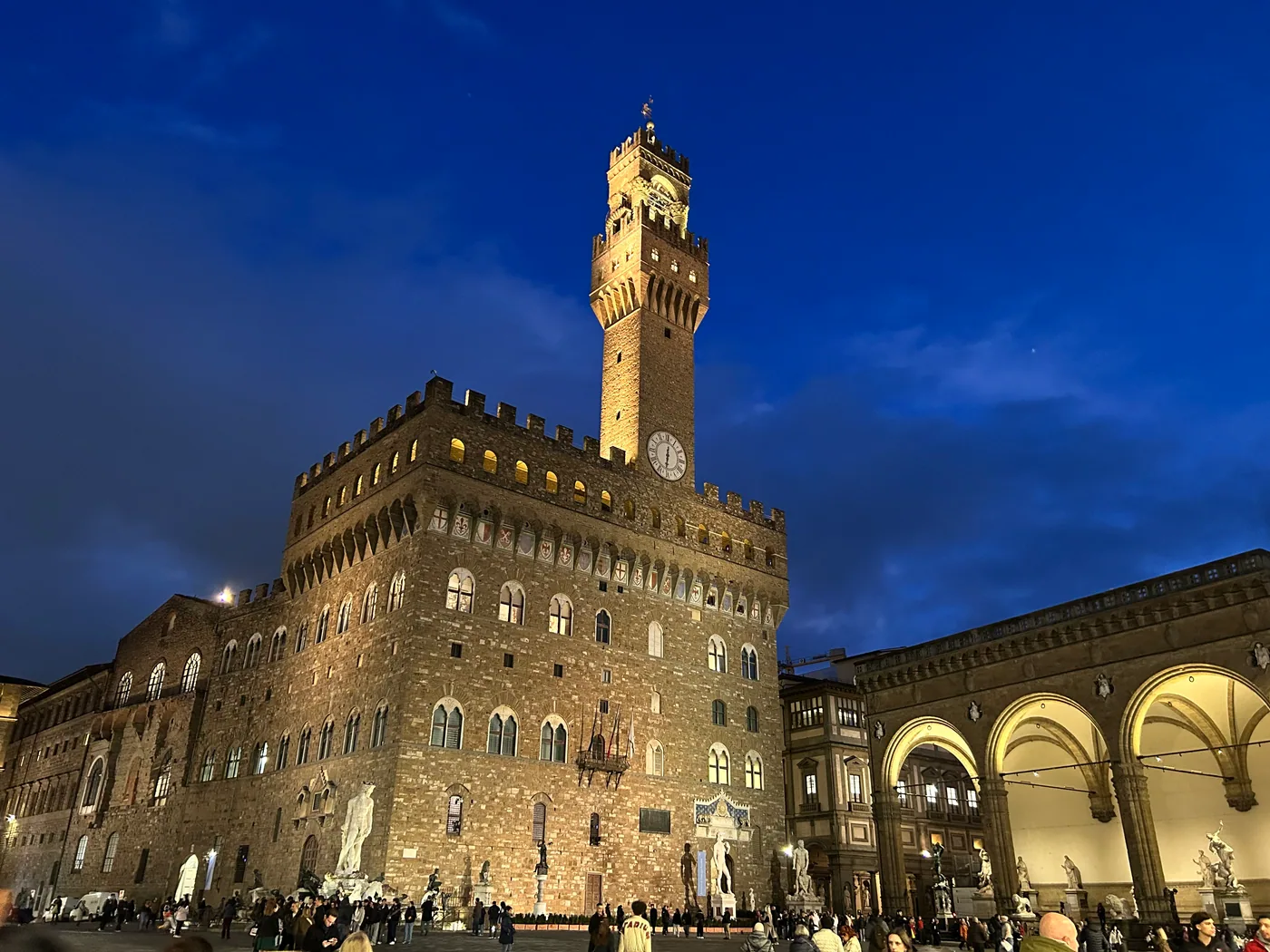
Inside Palazzo Vecchio, the Salone dei Cinquecento is the room to understand the scale of Medici political Florence. The building also offers routes through spaces that are easy to miss if you only see the square from outside.
This is exactly the kind of stop that works well between larger museum reservations: substantial, but different enough from the Uffizi that it does not feel like more of the same.
The Medici Chapels: smaller, but not minor
The Medici Chapels stayed with me more than I expected.
I was particularly struck by the burial spaces associated with the Medici family and by Michelangelo’s New Sacristy, where sculpture, architecture and dynastic memory are compressed into a much smaller space than the Uffizi.
The original guide treated this as a short stop, and I still think that is useful: you do not need half a day for it. But short does not mean disposable.
It is exactly the kind of focused visit that can reset your attention between bigger collections.
The Duomo complex is not one attraction
A common planning mistake is buying a Duomo pass and imagining that you have booked “the Duomo.”
You have actually booked access to a complex of separate monuments, each with different physical demands and timing.
Cathedral
The cathedral itself is free to enter, subject to opening hours and queues. The interior is much more restrained than the exterior, which makes the scale of the dome even more dramatic.
Brunelleschi’s Dome
This is the part I remember most.
The climb has 463 steps and no lift. The current Brunelleschi Pass includes the Dome, Bell Tower, Opera Duomo Museum, Baptistery and Santa Reparata, and the Dome requires a specific booked time slot. The Opera also warns that the climb is unsuitable for some visitors with cardiovascular or respiratory conditions, vertigo or claustrophobia.
Giotto’s Bell Tower
The Campanile is another serious climb — 414 steps — but gives you something the dome cannot: a view with Brunelleschi’s dome itself in it.
Baptistery
This is where current information really matters.
As of 2026, the vault mosaics are under a major restoration project and are not visible in the normal ground-level visit. The Opera di Santa Maria del Fiore says the project is expected to run for years and currently offers special restoration-site tours that can bring visitors unusually close to the mosaics.
So if the gold mosaic ceiling is the entire reason you wanted the Baptistery, check the official Baptistery notice before buying.
Museo dell’Opera del Duomo
Do not treat the museum as leftover content from the square.
It holds the originals of works that have been moved indoors for preservation, including Ghiberti’s Gates of Paradise, as well as Michelangelo’s Bandini Pietà and Donatello’s Penitent Magdalene.
This is one of the places I would keep precisely because it adds context to everything you have just seen outside.
Palazzo Pitti deserves more than leftover time
I would not treat Palazzo Pitti as “if we finish the Uffizi early.”
I loved the Royal Apartments, and during my visit there was also a costume exhibition. That gave the palace a completely different texture from the Uffizi: rooms, decoration, fashion and court life rather than a sequence centred mainly on individual paintings.
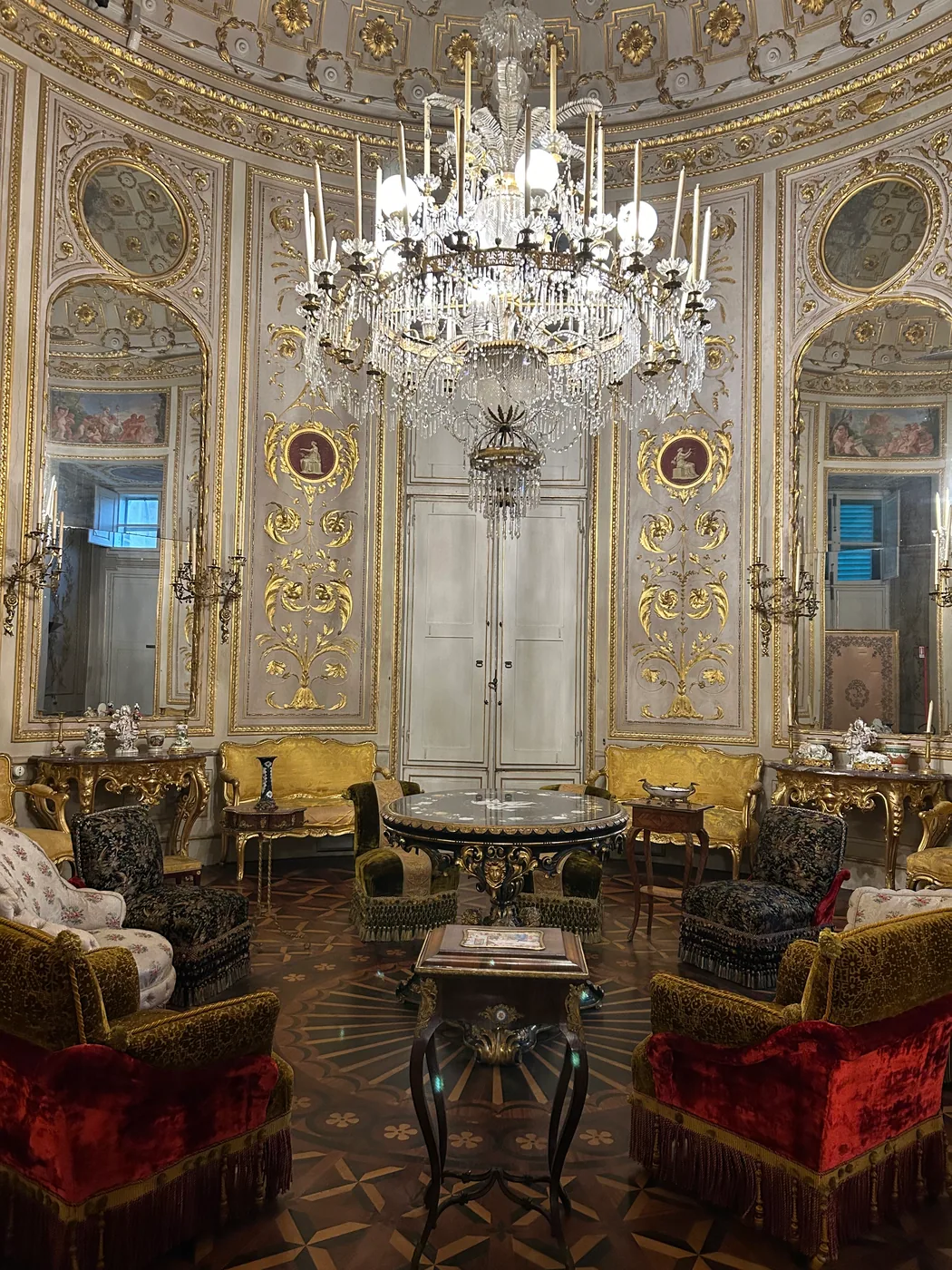
The Palatine Gallery is also hung in the older palace style, with paintings densely arranged inside decorated rooms. That is a completely different museum experience from the cleaner, chronological logic most visitors expect.
If you add the Boboli Gardens, give this side of the Arno a proper block of time.
Bargello and Museo Galileo: two very different resets
If paintings are beginning to blur, changing subject is often better than stopping sightseeing altogether.
The Bargello is the obvious move if you want sculpture. Donatello’s bronze David is one of the headline works, and the museum also makes Florence’s sculpture and decorative arts feel much more central than they do inside the Uffizi.
The Museo Galileo, close to the Uffizi, worked even better for me as a change of rhythm.
I loved it.
Telescopes, scientific instruments and the history of observation shift the whole subject of the day. The collection even includes preserved relics associated with Galileo, including one of his fingers — strange, memorable and very Florence in the way art, science and history overlap.
Florence after dark is part of the itinerary
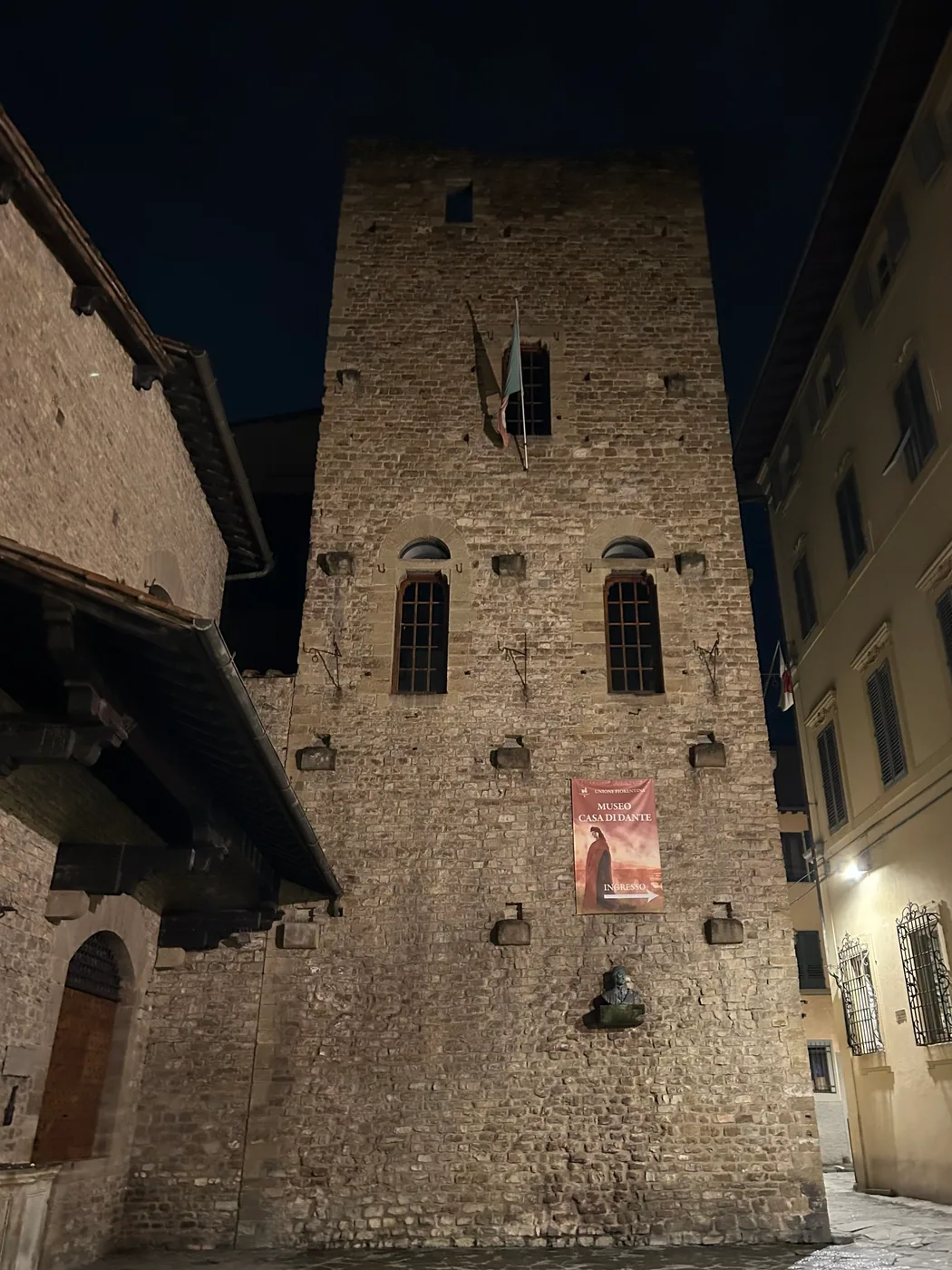
Some of my favourite images from the trip are not museum interiors at all.
They are Florence after the major visits are over.
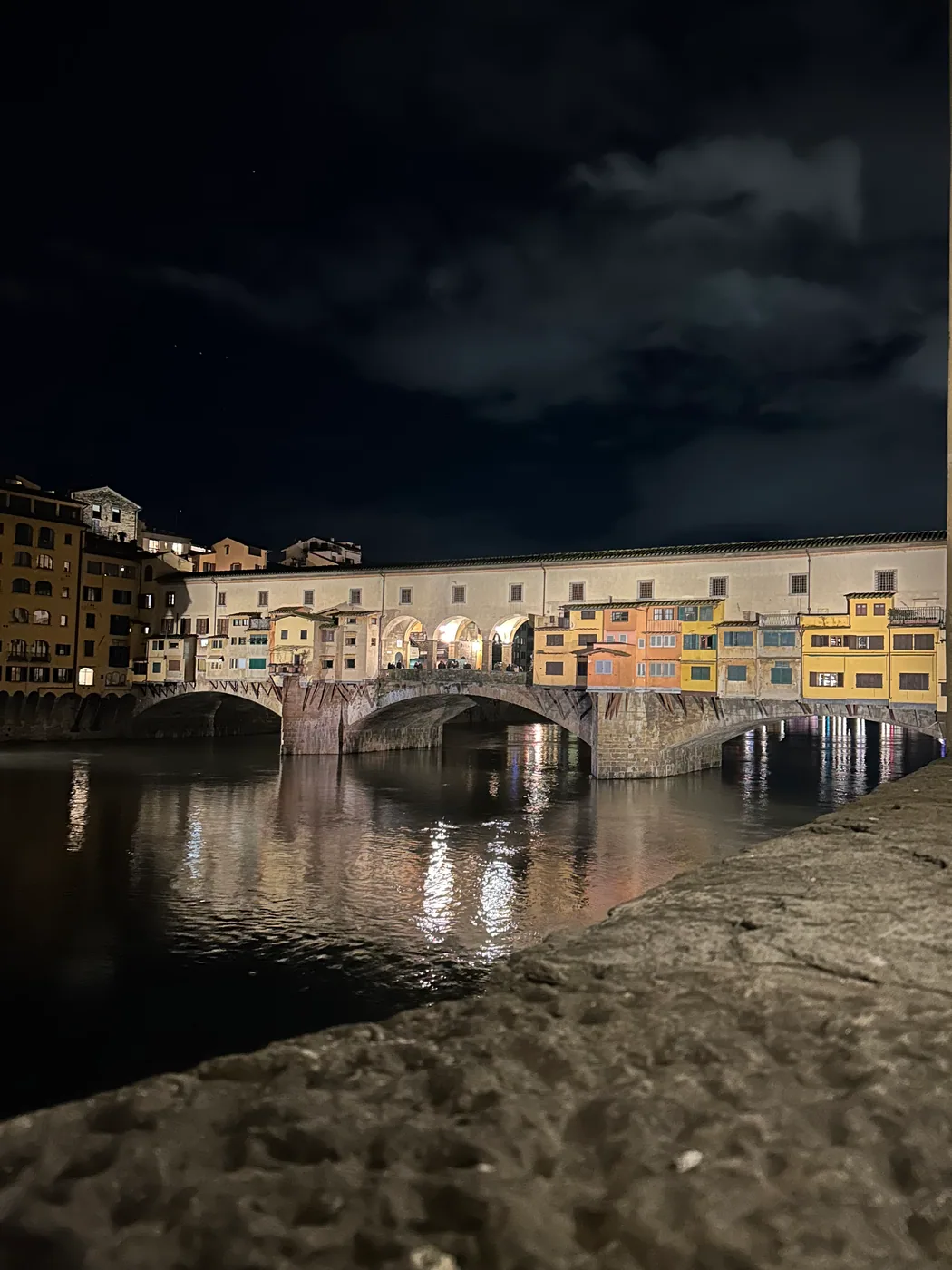
The Casa di Dante area became much more atmospheric after dark too.
And Ponte Vecchio is not only something to photograph from the riverbank. The jewellery shops built into the bridge are part of its character when you actually cross it.
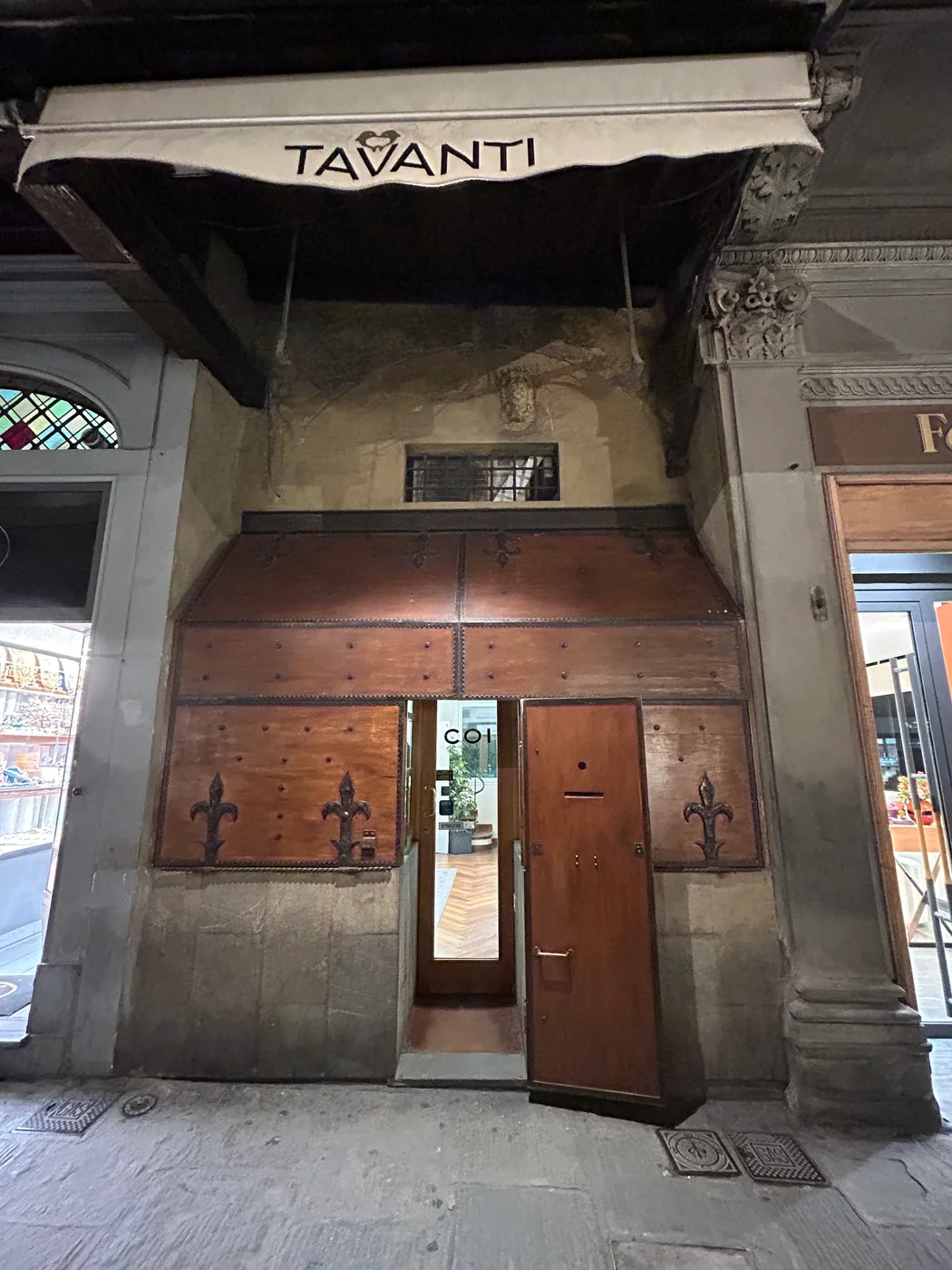
This is why I would not schedule Florence as museum opens → museum closes → dinner → sleep. The streets after dark are part of how the day becomes a memory rather than a list.
Eating: keep the classics, but do not cross the city for hype
My strongest food memory was not one famous restaurant.
I liked the traditional osterias in the narrow streets around the Duomo, Via dei Calzaiuoli and Piazza della Signoria. They fitted naturally into the route, which is often more valuable than building an evening around one viral address.
Two Florentine classics are still worth understanding properly.
Bistecca alla fiorentina is a thick T-bone, traditionally grilled very rare and normally ordered by weight for sharing. It is often associated with Tuscan cattle breeds such as Chianina. If you want it, check the weight and price before ordering rather than treating it like a normal single-person steak.
Lampredotto is the opposite kind of meal: cheap, fast, deeply local street food, usually served in a bread roll with sauce from traditional trippai.
I would keep both in the guide, but neither is worth turning the whole day into a restaurant commute.
Piazzale Michelangelo and San Miniato
For a wider city view, Piazzale Michelangelo is the obvious sunset stop and therefore also the obvious crowd magnet.
If you still have energy, continue uphill to San Miniato al Monte. The Romanesque church gives you another perspective over Florence and a much quieter architectural experience after the museum centre.
Check current service times if you are specifically hoping to hear liturgy or chant; do not build the itinerary around an old timetable.
Would I cut anything next time?
When I answered this after the trip, my answer was no.
That does not mean everyone needs exactly the same list. It means the structure worked: major collections were broken up by churches, palace interiors, science, food, bridges and night walks.
If I were rebuilding the trip for a first visit, I would keep that principle.
Day 1
Duomo complex → Piazza della Signoria / Palazzo Vecchio → Uffizi → dinner nearby → evening walk.
Day 2
Medici Chapels → Santa Croce or Museo Galileo → Palazzo Pitti → Ponte Vecchio after dark.
Optional additions
Accademia if David is a priority; Bargello if sculpture matters more; Piazzale Michelangelo and San Miniato when you want to finish outdoors.
The booking order I would use
If dates are fixed, I would protect these first:
- Brunelleschi’s Dome, because the timed slot is compulsory.
- Uffizi, especially in busy periods.
- Accademia, if seeing David is non-negotiable.
Then arrange the more flexible sites around those anchors.
The historic centre is compact enough that walking is usually the best transport, but compact does not mean effortless. A dome climb plus two major museums can still destroy a day if you schedule them without margins.
For the planning method behind these routes, see how I plan a city break. And if you are choosing between two very different Italian city breaks, compare this with my Rome guide: Florence worked because art and interiors were constantly broken up by food and evening streets; Rome worked because the walking itself became part of the experience.
Related articles
Written by

Sara
Licensed Pharmacist · Travel Creator
Sara brings a pharmacist's eye to health topics and a personal voice to travel, beauty and everyday lifestyle.
About Sara